

Summary
For decades, the O&M manual has been one of the final deliverables at practical completion. It provides building owners with important information about assets, systems and maintenance requirements. But buildings don't stop evolving after handover. Equipment is replaced, layouts change and maintenance records grow over time. So, should building information remain static, or should it evolve alongside the building itself?
Introduction
For many construction projects, practical completion marks the finish line.
The keys are handed over.
The final documents are issued.
The O&M manual is delivered.
Project complete.
Or is it?
Whilst construction may be finished, the life of the building is only just beginning.
From the moment occupants move in, the building starts to evolve.
Maintenance is carried out.
Assets are replaced.
Spaces are refurbished.
New equipment is installed.
Yet the information delivered at handover often remains exactly as it was on the day the project ended.
That raises an important question.
Should a building's information remain static when the building itself never does?
The Traditional Role of the O&M Manual
Operation and Maintenance (O&M) manuals have long been an essential part of project handover.
They typically contain valuable information including:
- Operating instructions
- Maintenance requirements
- Product data sheets
- Warranties
- Test certificates
- Commissioning information
- Asset details
- Health and Safety documentation
These documents provide an important snapshot of the building at the point of handover.
For many years, that was enough.
Today, buildings demand more.
Buildings Continue to Change
No building stays exactly the same.
Over time:
- Equipment reaches the end of its life.
- Components are upgraded.
- Rooms are repurposed.
- Maintenance activities are completed.
- Compliance inspections take place.
- Refurbishment projects are undertaken.
Every one of these changes creates new information.
If those updates aren't recorded, the gap between the building and its documentation grows wider every year.
From Static Documents to Living Information
Traditionally, an O&M manual has been viewed as a collection of documents.
Increasingly, organisations are moving towards something much more valuable.
A live building record.
Instead of simply storing information, a live record evolves alongside the building.
As maintenance is completed, records are updated.
As assets are replaced, information changes.
As inspections are carried out, the building's history grows.
Rather than asking:
"Where's the latest document?"
Building owners can ask:
"What's the current status of this asset?"
That's a significant shift.
Why It Matters
Keeping building information up to date delivers benefits throughout the lifecycle of an asset.
It helps:
- Facilities managers access accurate information.
- Maintenance teams understand asset history.
- Building owners plan future investment.
- Contractors carry out work more efficiently.
- Compliance teams demonstrate regulatory requirements.
Most importantly, it creates confidence that decisions are being made using current information rather than historical records.
Supporting the Golden Thread
The Building Safety Act introduced the concept of the Golden Thread to ensure important building information remains accurate, accessible and up to date.
A live building record aligns perfectly with that principle.
Rather than treating building information as something completed at handover, it becomes something that is continually maintained throughout the life of the building.
This helps preserve knowledge, improve safety and support better decision-making for years to come.
Technology Is Changing Expectations
Today's building owners expect more than folders of PDFs.
They expect information to be:
- Searchable
- Accessible from anywhere
- Easy to update
- Connected to assets
- Available when needed
As buildings become smarter, the way we manage information must evolve too.
The future isn't simply digital documents.
It's connected, living information.
How Liaison Helps
At Liaison, we believe handover should mark the beginning of a building's digital journey, not the end.
View
View transforms traditional handover documentation into a secure, searchable digital environment where drawings, O&M manuals, Health & Safety files and asset information remain accessible long after practical completion.
Maintain
Maintain builds on that foundation by recording maintenance activities, inspections and asset history, helping organisations create a live building record that continues to evolve throughout the building's lifecycle.
Together, View and Maintain help bridge the gap between project completion and long-term building management, ensuring valuable information never becomes outdated or forgotten.
Looking Ahead
The buildings we construct today are expected to operate for decades.
The information that supports them should be just as long lasting.
Rather than seeing handover as the end of information management, the industry has an opportunity to see it as the beginning of continuous knowledge management.
That shift could transform how buildings are operated, maintained and improved for generations to come.
Conclusion
The O&M manual remains one of the most important deliverables in construction.
But in an increasingly digital world, it shouldn't be the final chapter.
By moving from static documentation to a live building record, organisations can create buildings that are easier to maintain, safer to operate and better prepared for the future.
Because a building's story doesn't end at handover.
In many ways, that's where it truly begins.

Posted on 07 Sep 2026
Related platformView
Online Building Information
Handover is three weeks away and the O&M manual doesn’t exist yet. View collects supplier information as the project runs, then gives the client a searchable record of every asset instead of a PDF nobody opens.
Find out more
What Building Owners Actually Need at Handover
Practical completion is a major milestone, but receiving the keys is only part of a successful building handover. Building owners also need the information required to safely operate, maintain and understand their new asset. From O&M manuals and as-built drawings to warranties, certificates and asset information, we look at what a good handover should actually provide.
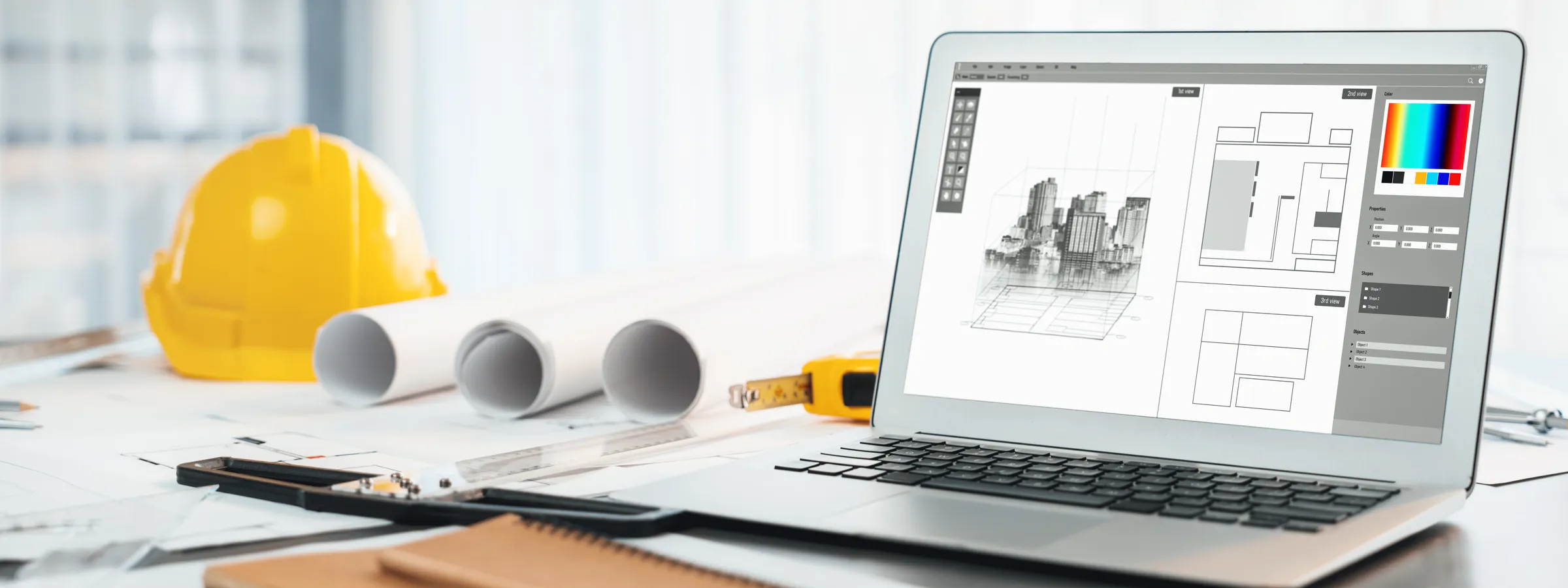
Your Building Has Thousands of Documents. How Quickly Can You Find the One You Need?
A building can have thousands of documents stored across O&M manuals, drawings, certificates, asset records and maintenance information. But having the information is only useful if people can find it when they need it. We look at why information retrieval matters throughout a building's operational life and how better organisation can save time, reduce frustration and support better decisions.
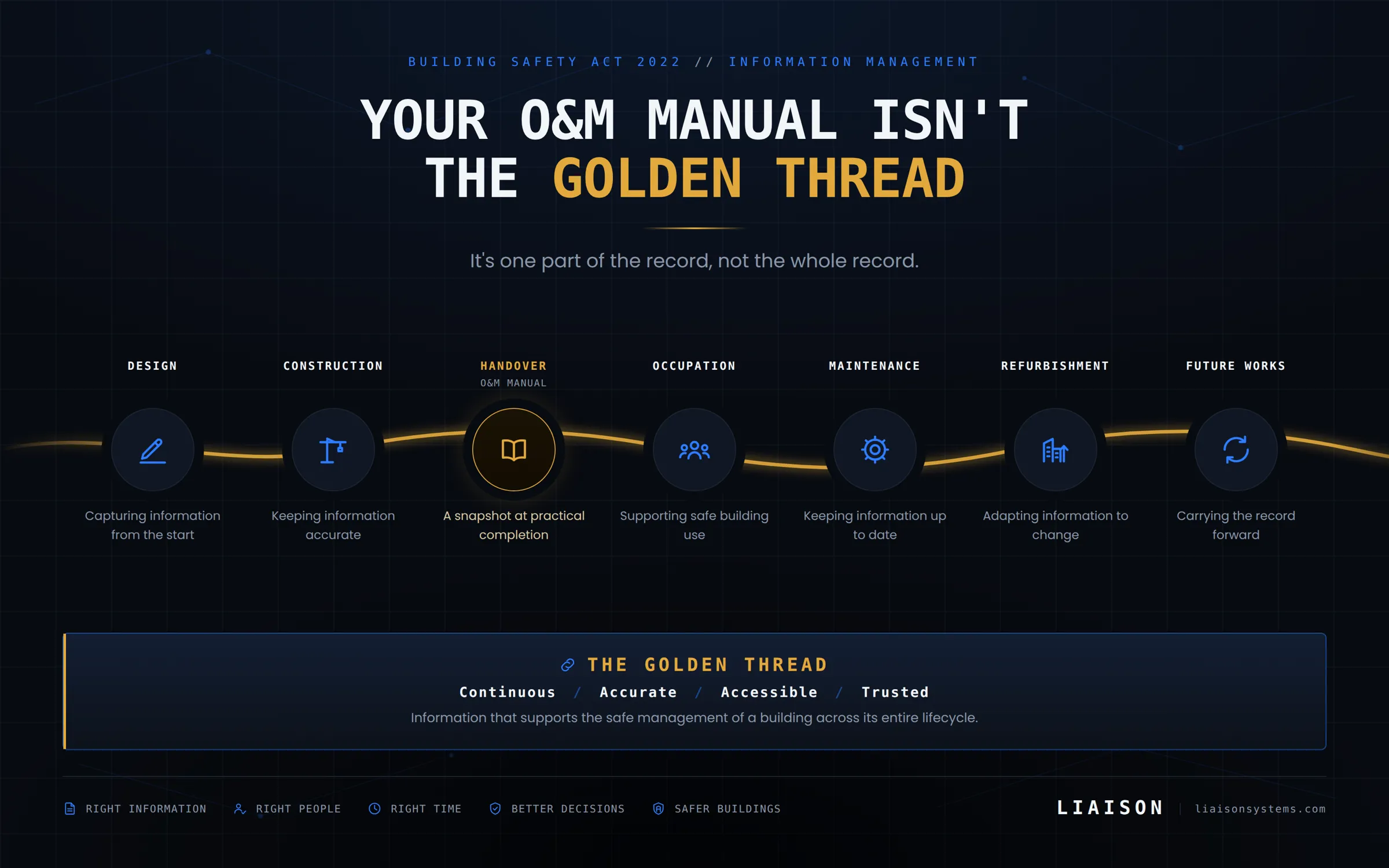
Your O&M Manual Isn't the Golden Thread: Understanding the Difference
An O&M Manual is an essential part of a building's information, but it isn't the Golden Thread. This article explains the difference, why it matters at handover and beyond, and how connected digital information can support safer, more effective building management throughout the entire lifecycle.