

Summary
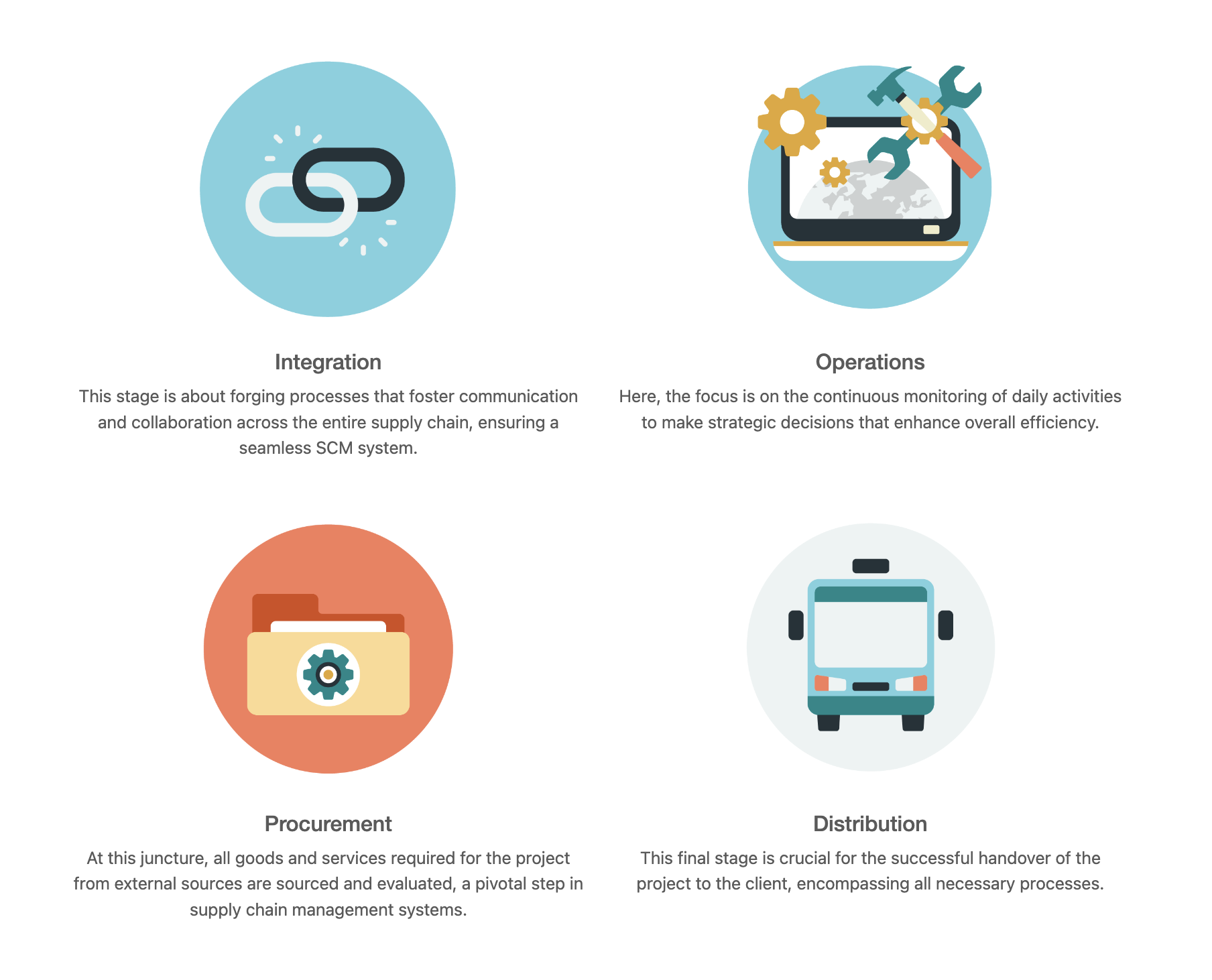
Supply Chain Management is the control of all suppliers working on a project. There are 4 main sections of Supply Chain Management: procurement, operations, distribution, and integration.
What is Supply Chain Management, What Role Does It Play, and Who Needs It?
Why is Supply Chain Management Important?
Effective Supply Chain Management can significantly cut down time and resources, while poor SCM can lead to lower quality, costly delays, increased risk, and even legal repercussions. This highlights why organisations must diligently monitor and control their supply chains at each stage. Depending on the industry, certain levels of Supply Chain Management might be mandated by law, particularly in areas concerning health and safety, to mitigate risk.Who Benefits from Supply Chain Management?

How do you Improve Supply Chain Management?

Posted on 29 Sep 2025
Related platformMobilize
Supply Chain Management
Mobilize offers a fully customisable suite of tools designed to help you manage your entire supply chain with precision giving you complete visibility and control so that you can reduced risk at every stage, from onboarding through to project review.
Find out more
What is PAS-91?
PAS-91 is a standardised set of questions designed to simply the pre-qualification process.

Why can a Pre-Construction Questionnaire (PCQ) Matter More Than a PQQ
In construction, most organisations are familiar with the Pre-Qualification Questionnaire (PQQ). It assesses a contractor’s general suitability, financial stability, health and safety policies, insurance and company credentials. But when it comes to pre-construction, a PQQ is not enough. A Pre-Construction Questionnaire (PCQ) goes further. It is project specific, designed to gather the operational, safety and competency information needed before work begins on a particular site. If a PQQ tells you whether a contractor can work in construction, a PCQ tells you whether they are ready to work on this project.

The Building Safety Act 2022 Explained: A Complete Guide for Construction Professionals
The Building Safety Act 2022 is the most significant change to building safety regulation in England in a generation. Introduced in response to the Grenfell Tower tragedy and the Hackitt Review, it creates a stricter, more accountable system for designing, constructing and managing buildings, with the strongest controls reserved for higher-risk buildings (HRBs). The Act introduces a new dutyholder regime aligned with CDM 2015, a three-stage Gateway approval process, a legal requirement for the Golden Thread of information and a comprehensive set of duties for managing buildings once they are occupied. It also established the Building Safety Regulator, which in January 2026 moved out of the Health and Safety Executive to become a standalone body, with further reform towards a single construction regulator already underway. This guide explains what the Act covers, who it affects, and the practical steps construction and supply chain teams should be taking now.