


Summary
Sustainability is no longer a “nice to have” in procurement, it is increasingly a core evaluation criterion in both public and private sector tenders. Environmental impact, carbon reduction, ethical sourcing and long-term resource efficiency are now embedded into procurement policy. This shift has given rise to Green Procurement, sometimes referred to as environmentally responsible or sustainable procurement. But what does green procurement actually involve and why does it matter in today’s tendering landscape?
What Is Green Procurement?
Green procurement is the process of purchasing goods, works and services in a way that reduces environmental impact across the product or service lifecycle.
It considers:
- Raw material sourcing.
- Manufacturing processes.
- Transportation emissions.
- Energy consumption.
- Waste generation.
- End-of-life disposal.
Rather than focusing solely on upfront cost, green procurement evaluates whole-life environmental impact alongside price and quality.
Why Green Procurement Matters in Tendering
1️⃣ Regulatory and Policy Requirements
In the UK, sustainability is increasingly embedded in public procurement policy, including under the Procurement Act 2023, which emphasises broader value considerations in contract awards.
Environmental criteria are frequently included within:
- Quality scoring sections.
- Social value assessments.
- Mandatory compliance requirements.
- Carbon reduction plans.
Failure to address sustainability can result in lost marks or disqualification.
2️⃣ Carbon Reduction & Net Zero Targets
Many contracting authorities and large corporates have declared net zero ambitions. Procurement plays a major role in achieving these targets because supply chains often account for the majority of an organisation’s emissions (Scope 3).
Tender responses increasingly require:
- Carbon Reduction Plans.
- Emissions reporting.
- Waste management strategies.
- Environmental risk assessments.
3️⃣ Risk Management
Environmental risks such as regulatory fines, supply chain disruption or reputational damage can significantly affect project delivery.
Green procurement helps organisations:
- Identify environmentally high-risk suppliers.
- Reduce exposure to non-compliance.
- Improve long-term resilience.
4️⃣ Competitive Advantage
Suppliers with strong environmental credentials can:
- Score higher in quality evaluations.
- Strengthen brand perception.
- Improve long-term buyer relationships.
- Win places on sustainability-focused frameworks.
Green capability is increasingly a differentiator, particularly in construction, infrastructure, utilities, and manufacturing.
How Green Procurement Is Evaluated in Tenders
Buyers typically assess sustainability using structured scoring models.
These may include:
🔹 Environmental Management Systems
Certifications such as ISO 14001 demonstrate formal environmental controls.
🔹 Carbon Reduction Plans
Clear targets, measurement methods and reporting mechanisms.
🔹 Sustainable Materials & Sourcing
Evidence of responsibly sourced materials or low-carbon alternatives.
🔹 Waste Reduction & Circular Economy Practices
Commitments to reuse, recycling and minimising landfill impact.
🔹 Innovation
Use of new technologies or processes that reduce environmental footprint.
Strong responses provide measurable evidence, not generic sustainability statements.
Common Challenges in Green Procurement
⚠ Greenwashing
Unsubstantiated environmental claims can damage credibility and lead to compliance issues.
⚠ Data Gaps
Many suppliers struggle to measure and report accurate emissions data.
⚠ Balancing Cost & Sustainability
Environmentally preferable options may carry higher upfront costs requiring whole-life cost analysis.
⚠ Supplier Capability Variance
SMEs may lack formal certification but still operate responsibly. Buyers must evaluate proportionately.
Best Practices for Embedding Green Procurement
Organisations looking to strengthen sustainability in tendering should:
- Define clear environmental criteria and weightings.
- Align sustainability goals with corporate strategy.
- Use measurable KPIs.
- Monitor performance post-award.
- Require structured evidence, not marketing claims.
Green procurement must extend beyond the tender stage as ongoing supplier monitoring is essential to deliver real impact.
The Role of Technology in Green Procurement
Digital procurement platforms can significantly improve sustainability governance by:
- Tracking carbon reduction commitments.
- Storing environmental certifications and policies.
- Comparing sustainability metrics across suppliers.
- Creating audit trails for regulatory compliance.
- Monitoring environmental KPIs during contract delivery.
Without structured systems, environmental evaluation can become inconsistent and difficult to defend.
How Mobilize Supports Green Procurement
Mobilize enables procurement teams to integrate sustainability into structured evaluation and supplier management processes.
With Mobilize, organisations can:
- Embed environmental criteria into tender scoring models.
- Store and manage ISO certifications and carbon reduction plans.
- Track supplier performance over time.
- Maintain transparent audit trails for governance.
Rather than treating sustainability as a standalone checkbox, Mobilize allows green procurement to become part of a measurable, data-driven decision framework.
As environmental expectations continue to rise, organisations that integrate sustainability into structured procurement processes will not only remain compliant they will build more resilient, future-ready supply chains.

Posted on 23 Feb 2026
Related platformMobilize
Supply Chain Management
You’re chasing suppliers for certificates that expired last month. Mobilize onboards them once, then keeps insurance, accreditations and PQQ answers current automatically, so you know who is approved before you tender.
Find out more
The Construction Companies That Will Thrive Over the Next 10 Years
The construction industry is changing rapidly. Advances in technology, growing sustainability requirements and increasing client expectations are reshaping how projects are delivered. But what will separate the businesses that thrive over the next ten years from those that struggle? In this article, we explore the key characteristics that successful construction companies are already investing in today.
How to Complete the Mobilize Sustainability Assessment
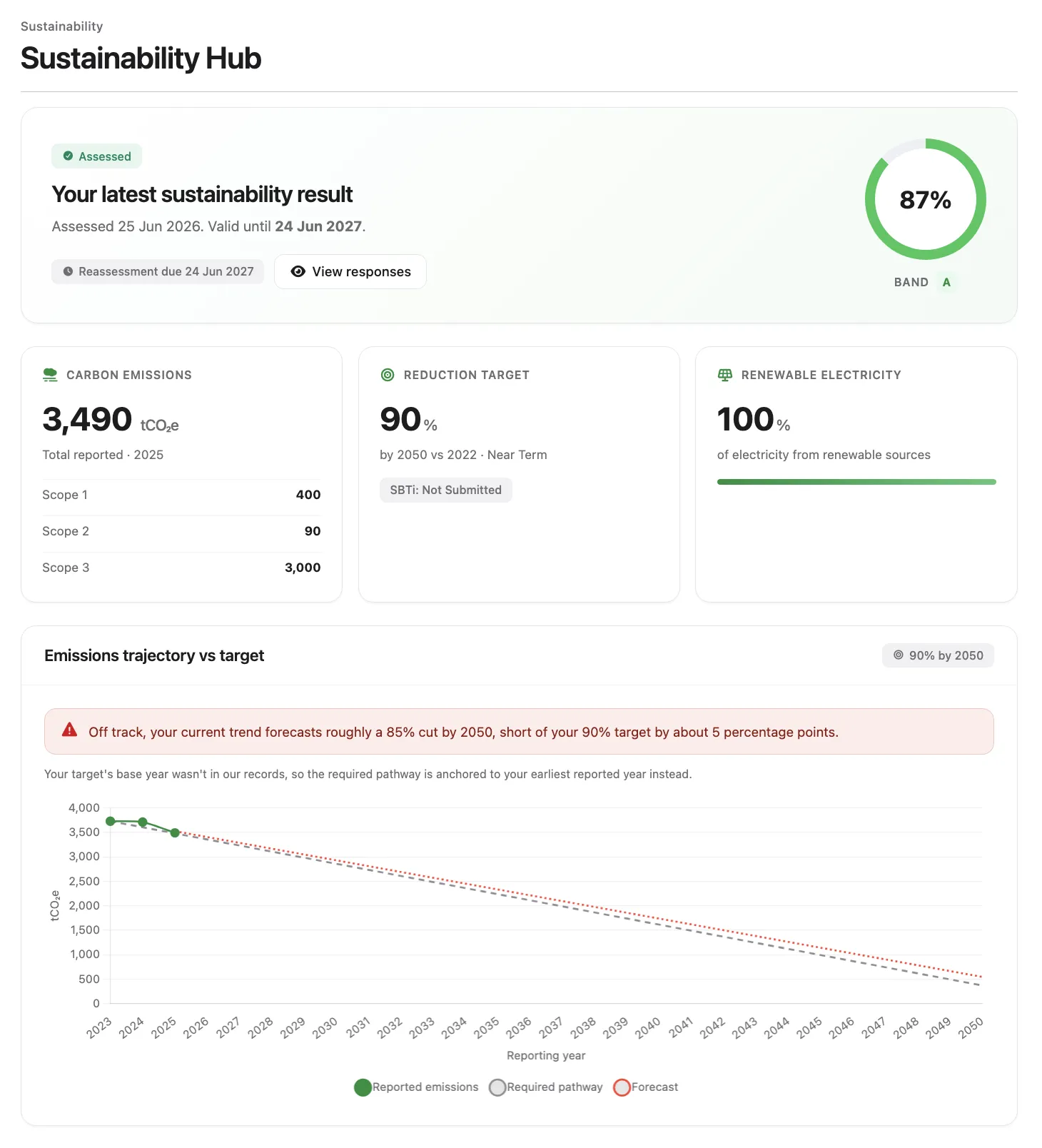
Sustainability is becoming an increasingly important part of doing business in construction. Whether you're responding to a pre-qualification questionnaire (PQQ), working towards Net Zero or strengthening your environmental credentials, clients are increasingly asking suppliers to demonstrate their sustainability performance. The Mobilize Sustainability Assessment has been designed to make that process simple. Rather than completing different sustainability questionnaires for multiple clients, suppliers complete a single structured assessment that measures their sustainability performance, records supporting evidence and provides instant feedback on where they are performing well and where improvements can be made. The same assessment can then be viewed by participating supply chain owners, reducing duplicated effort. In this guide, we'll explain how to register, complete your assessment and make the most of the information it provides.

Why Carbon Data Is Only as Good as the Information Behind It
As sustainability becomes a greater priority across the construction industry, organisations are investing more time and resources into measuring their carbon emissions. From Carbon Reduction Plans to Scope 1, Scope 2 and Scope 3 reporting, businesses are gathering more environmental data than ever before. But there is one question that often gets overlooked: Can you trust the data you're reporting? After all, even the most ambitious sustainability strategy is only as good as the information it's built on. If your carbon data is incomplete, inconsistent or out of date, the decisions you make and the reports you produce may not reflect the true environmental impact of your business.