


Summary
In the modern US business landscape, procurement isn’t just about cost and compliance anymore; it’s about purpose, equity, and sustainability. Organisations large and small are placing Supplier Diversity and Environmental, Social & Governance (ESG) objectives at the centre of their procurement strategies to align with corporate values, satisfy customer expectations, and meet evolving regulatory and reporting frameworks. While traditional supplier management focuses on delivery reliability and compliance, forward-thinking organisations recognise that building diverse and sustainable supply chains delivers measurable value: deeper innovation, stronger community impact, and long term resilience.
What Is Supplier Diversity and ESG Procurement?
Supplier Diversity refers to intentional sourcing from underrepresented, or minority owned businesses, including women owned, veteran owned, Black, Hispanic, and LGBTQ+ owned suppliers, to expand economic opportunities and foster an inclusive supply ecosystem.
ESG procurement expands this further by integrating environmental stewardship, social responsibility, and strong governance principles into supplier selection and ongoing management. It asks questions such as:
Does the supplier have carbon reduction targets?
What are its labour practices and human rights policies?
Does it transparently report on sustainability metrics?
Together, Supplier Diversity and ESG reflect a procurement philosophy that values ethical outcomes as well as operational performance.
Why US Organisations Are Prioritising Supplier Diversity & ESG
Several forces are driving this shift:
1. Corporate and Public Sector Expectations
Many US Fortune 500 companies and federal/state contracts now require documented diversity spend targets and sustainability reporting, making Supplier Diversity and ESG essential for eligibility and competitiveness.
2. Investor and Consumer Pressure
Investors increasingly assess non-financial metrics when making capital decisions, and consumers reward organisations that are seen as socially responsible.
3. Community and Economic Impact Goals
Commitments to local economic development and equitable opportunities mean organisations increasingly see procurement as a tool for positive social change.
Key Strategies for Driving Supplier Diversity and ESG Outcomes
1. Set Clear, Measurable Goals
Establish defined diversity of spend targets and ESG criteria that align with your organisation’s broader DEI and sustainability priorities. Track progress publicly and internally.
2. Expand Supplier Outreach
Use inclusive sourcing practices and partnerships with diversity councils (e.g., NMSDC, WBC) to identify qualified, diverse suppliers.
3. Standardise Diversity & ESG Qualification Criteria
Incorporate ESG metrics and diversity certification questions into digital pre-qualification processes, so these factors are evaluated consistently and fairly across all suppliers.
4. Leverage Data for Transparency and Accountability
Digital procurement platforms enable organisations to collect and analyse diversity and sustainability metrics in real time, turning static reporting into actionable insight. This becomes especially valuable when benchmarking progress or preparing ESG disclosures.
5. Integrate Supplier Development Programs
Offer onboarding support, capability building and mentoring opportunities for diverse suppliers, helping them meet compliance expectations and compete for greater contract opportunities.
The Role of Digital Tools in Supporting Diversity and ESG Procurement
Delivering meaningful Supplier Diversity and ESG outcomes requires more than policy statements it demands visibility, structure, and measurable accountability. Digital procurement platforms like Mobilize enable organisations to embed diversity and sustainability directly into their supplier management processes.
Mobilize centralises supplier data, capturing diversity certifications, ESG disclosures, sustainability metrics, and compliance documentation in one secure system. It enables procurement teams to:
- Track and report diversity spend in real time.
- Monitor ESG performance alongside traditional compliance indicators.
- Standardise qualification criteria across all suppliers.
- Generate audit-ready reports for stakeholders, investors, and regulators.
- Identify gaps and benchmark progress against defined targets.
By unifying supplier onboarding, pre-qualification, performance management, and ESG reporting within a single platform, Mobilize reduces administrative complexity while strengthening transparency and governance. The result is a procurement function that is not only efficient, but strategically aligned with organisational purpose and long-term value creation.
Conclusion
Supplier Diversity and ESG are no longer “nice to have” components of procurement in the United States, they are essential drivers of competitive advantage, risk mitigation, and organisational reputation. By codifying diversity and sustainability into supplier qualification, performance, and governance processes, and leveraging digital tools to support those efforts, US procurement teams can deliver measurable business value while advancing broader social goals.
Connect with our team to schedule a personalized product demonstration and experience Mobilize in action.

Posted on 10 Feb 2026
Related platformMobilize
Supply Chain Management
You’re chasing suppliers for certificates that expired last month. Mobilize onboards them once, then keeps insurance, accreditations and PQQ answers current automatically, so you know who is approved before you tender.
Find out more
Planning Your 2027 Construction Compliance Calendar: What to Prepare for Now
2027 might still feel some way off, but effective compliance management starts long before January. Supplier insurances expire, accreditations need renewing, PQQ information becomes outdated and regulatory requirements continue to evolve. Planning your compliance calendar now can help your business stay ahead of deadlines, reduce supplier risk and avoid the last-minute rush.

The Building Safety Levy: What It Means for Your Supply Chain Costs
From 1st October 2026, the Building Safety Levy will introduce a new cost for many residential developments in England, with funds contributing towards the remediation of historic building safety defects. While the levy is payable by developers rather than suppliers, additional development costs inevitably raise questions about budgets, procurement and supply-chain pressure. We look at what is changing, who the levy affects and why strong supply-chain management will become even more important.
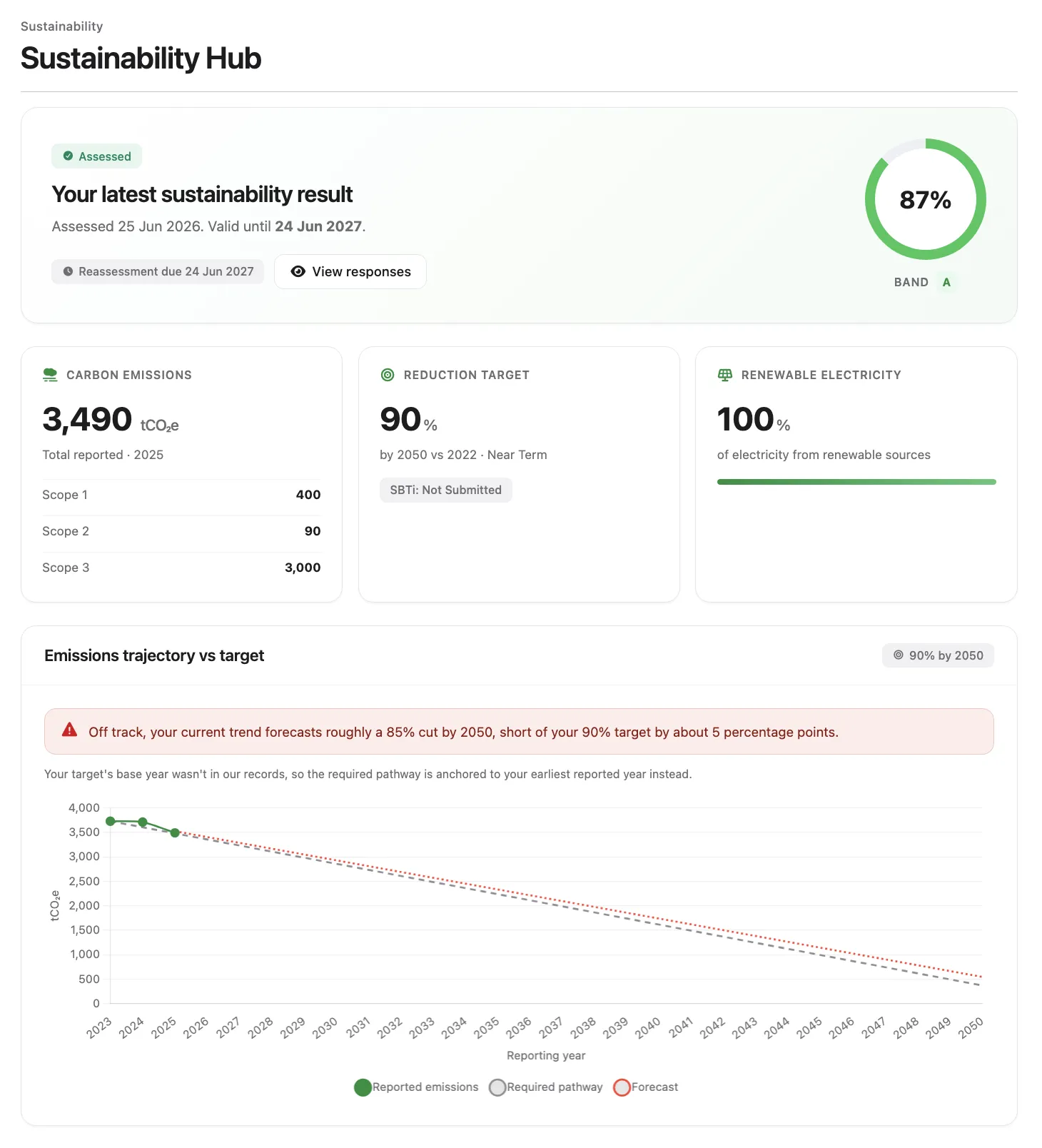
How to Complete the Mobilize Sustainability Assessment
Sustainability is becoming an increasingly important part of doing business in construction. Whether you're responding to a pre-qualification questionnaire (PQQ), working towards Net Zero or strengthening your environmental credentials, clients are increasingly asking suppliers to demonstrate their sustainability performance. The Mobilize Sustainability Assessment has been designed to make that process simple. Rather than completing different sustainability questionnaires for multiple clients, suppliers complete a single structured assessment that measures their sustainability performance, records supporting evidence and provides instant feedback on where they are performing well and where improvements can be made. The same assessment can then be viewed by participating supply chain owners, reducing duplicated effort. In this guide, we'll explain how to register, complete your assessment and make the most of the information it provides.