


Summary
From 1st October 2026, the Building Safety Levy will introduce a new cost for many residential developments in England, with funds contributing towards the remediation of historic building safety defects. While the levy is payable by developers rather than suppliers, additional development costs inevitably raise questions about budgets, procurement and supply-chain pressure. We look at what is changing, who the levy affects and why strong supply-chain management will become even more important.
Introduction
From 1st October 2026, another significant change is coming to residential development in England: the Building Safety Levy.
The levy will apply to certain new residential developments and purpose built student accommodation, with the money raised contributing towards the cost of addressing building safety defects.
For developers, it introduces another cost that needs to be considered when planning new developments.
But the implications may extend further.
When development costs increase, greater attention is inevitably placed on budgets, procurement, supplier selection and project efficiency.
So, what exactly is the Building Safety Levy, and what could it mean for the wider construction supply chain?
What Is the Building Safety Levy?
The Building Safety Levy is a charge on certain new residential development in England.
It forms part of the wider response to historic building safety issues and is intended to contribute towards the cost of remediating safety defects in existing buildings.
Unlike some parts of the post-Grenfell building safety regime, the levy isn't restricted to higher risk or high rise buildings.
Subject to the relevant conditions and exemptions, it can apply to new residential development more broadly.
The amount payable is based on the chargeable floorspace of a development, using a rate per square metre that varies depending on the local authority area.
Different rates also apply to qualifying previously developed, or brownfield, land.
When Does the Building Safety Levy Start?
The levy comes into operation on 1st October 2026.
Generally, relevant applications for building control approval or initial notices submitted on or after that date can fall within the new regime.
Existing applications submitted before 1st October are generally outside the levy, although a rejected application that has to be resubmitted after the start date may become liable.
That makes the coming weeks an important period for residential developers to understand how the new process affects upcoming projects.
Which Developments Are Affected?
The levy is focused on new residential development in England.
This includes qualifying developments creating new homes and purpose built student accommodation.
There are, however, important exemptions.
These include certain:
- Developments below the major-development threshold
- Social and affordable housing
- Supported housing
- Care homes and hospices
- Hospitals
- Hotels and hostels
- Children's homes
- School accommodation
- Domestic abuse accommodation
There are further exclusions, so developers should assess individual projects against the official regulations and government guidance rather than assuming a development is either chargeable or exempt.
How Much Will It Cost?
There isn't one national flat rate.
The levy is calculated using the amount of chargeable floorspace and a rate determined by the local authority in which the development is located.
The government has weighted rates using local housing values, meaning areas with higher average house prices generally have higher rates.
Developments on land meeting the levy definition of previously developed land also benefit from a reduced rate.
This means two otherwise similar developments in different parts of England could face different levy costs.
For developers operating nationally, understanding the location-specific impact will therefore be particularly important when forecasting project costs.
What Does This Have to Do With the Supply Chain?
Suppliers and subcontractors aren't directly responsible for paying the Building Safety Levy.
But that doesn't mean the supply chain won't feel its effects.
Every additional development cost places greater focus on the overall economics of a project.
Developers and contractors may therefore look even more closely at:
- Procurement efficiency
- Supplier pricing
- Programme certainty
- Supply-chain risk
- Productivity
- Rework and waste
- Supplier performance
The challenge will be managing these pressures without allowing cost reduction to undermine quality or building safety.
Cheapest Doesn't Always Mean Best Value
When budgets come under pressure, focusing heavily on headline price can be tempting.
But the lowest tender doesn't necessarily represent the lowest overall project cost.
A supplier that initially appears cheaper can become considerably more expensive if it contributes to delays, rework, quality issues or compliance problems.
Strong procurement therefore requires a broader understanding of suppliers.
That can include their:
- Financial position
- Relevant experience
- Insurance
- Accreditations
- Health and safety performance
- Quality processes
- Previous performance
- Sustainability credentials
As project margins face additional pressures, making informed supplier decisions becomes more important, not less.
Avoidable Costs Matter More
One of the consequences of increasing development costs is that businesses have even more reason to identify costs they can control.
The levy itself may be unavoidable on a qualifying development.
Duplicated administration isn't.
Poor supplier information isn't.
Unnecessary rework isn't.
Slow procurement processes aren't.
Missing compliance documents aren't.
Improving these areas won't remove the levy, but it can help organisations manage projects more efficiently in an increasingly challenging commercial environment.
Better Supply-Chain Visibility Can Reduce Risk
Good supply-chain management isn't simply about maintaining an approved supplier list.
It means understanding the organisations you're relying on to deliver a project.
Are their insurances current?
Have they demonstrated the required competencies?
Are their accreditations still valid?
How have they performed previously?
Are there emerging risks that need attention?
Having this information readily available gives procurement and commercial teams greater confidence when selecting suppliers and managing projects.
Don't Let Cost Pressure Compromise Building Safety
There is an important wider point here.
The Building Safety Levy exists because of the enormous cost of addressing historic building safety failures.
Its introduction should therefore not create a race to cut costs elsewhere at the expense of quality.
Quite the opposite.
The industry has an opportunity to become smarter about where efficiencies are achieved.
Better processes, stronger supplier management and improved information can reduce unnecessary costs while maintaining the standards expected of modern construction.
Efficiency and safety shouldn't be competing objectives.
Done properly, they support each other.
How Liaison Can Help
At Liaison, we help construction organisations create greater visibility and consistency across their supply chains.
Mobilize provides a central environment for managing supplier onboarding, pre-qualification, compliance, assessments, sustainability information and procurement activities.
Rather than relying on disconnected spreadsheets, emails and individual records, teams can maintain a clearer picture of the organisations within their supply chain.
This can help procurement teams identify risk earlier, reduce unnecessary administration and make more informed supplier decisions.
As commercial pressures increase, having confidence in the organisations delivering your projects becomes increasingly valuable.
Preparing for October
With the Building Safety Levy coming into operation on 1st October 2026, developers should ensure they understand which upcoming projects may be affected.
That means considering not only the levy itself, but its place within wider project budgets and procurement strategies.
Questions worth asking include:
- Which upcoming developments could fall within the levy?
- What rate applies in each local authority?
- Are any parts of the development exempt?
- How will the additional cost affect project viability?
- Where can existing procurement processes become more efficient?
- Do we have sufficient visibility of supplier risk and performance?
Preparing early gives organisations more opportunity to understand the financial impact rather than encountering it later in the development process.
Looking Ahead
The Building Safety Levy represents another significant change in the economics of residential development.
For developers, the immediate impact is financial.
For the wider construction industry, however, it reinforces something increasingly important.
Every project needs to deliver greater value from the resources available to it.
That doesn't mean choosing the cheapest suppliers.
It means reducing avoidable waste, improving procurement, managing risk and working with supply chains that can deliver safely, reliably and efficiently.
The Building Safety Levy officially arrives on 1st October 2026.
While suppliers won't pay the levy directly, its introduction adds another consideration to an already challenging development environment.
For construction businesses, that makes strong procurement and supply-chain management even more important.
The organisations best prepared won't simply ask: "Where can we cut costs?"
They'll ask: "Where can we work smarter without compromising quality or safety?"
That distinction could make all the difference.

Posted on 09 Sep 2026
Related platformMobilize
Supply Chain Management
You’re chasing suppliers for certificates that expired last month. Mobilize onboards them once, then keeps insurance, accreditations and PQQ answers current automatically, so you know who is approved before you tender.
Find out more
Planning Your 2027 Construction Compliance Calendar: What to Prepare for Now
2027 might still feel some way off, but effective compliance management starts long before January. Supplier insurances expire, accreditations need renewing, PQQ information becomes outdated and regulatory requirements continue to evolve. Planning your compliance calendar now can help your business stay ahead of deadlines, reduce supplier risk and avoid the last-minute rush.

Are Your Approved Suppliers Still Actually Approved? | Supplier Compliance
Getting onto an approved supplier list is only the beginning. Insurance expires, certifications lapse, businesses change and supplier performance evolves. If a supplier was approved one, two or even five years ago, how confident are you that they still meet your requirements today? We explore why supplier approval should be an ongoing process rather than a one time exercise.
How to Complete the Mobilize Sustainability Assessment
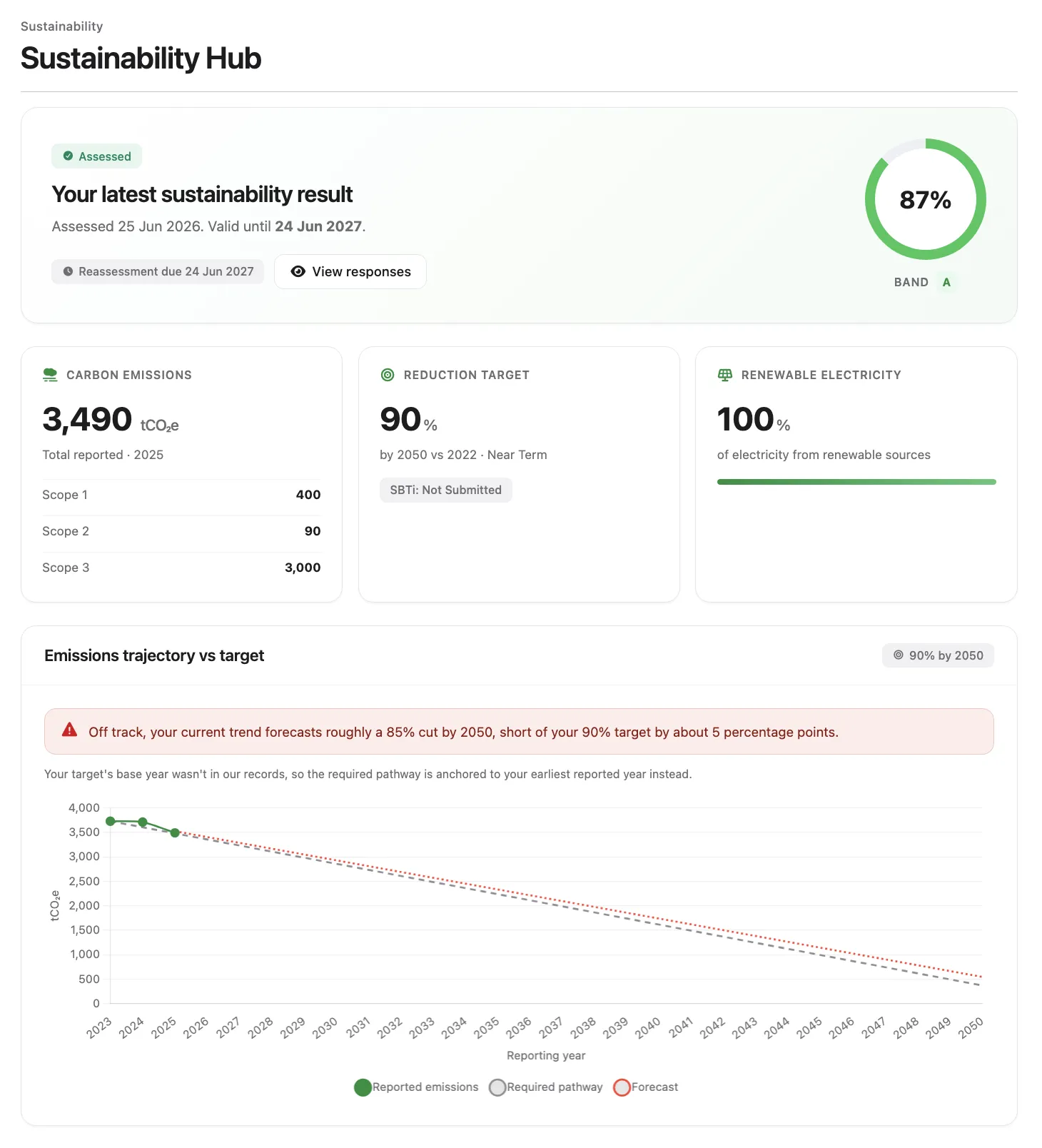
Sustainability is becoming an increasingly important part of doing business in construction. Whether you're responding to a pre-qualification questionnaire (PQQ), working towards Net Zero or strengthening your environmental credentials, clients are increasingly asking suppliers to demonstrate their sustainability performance. The Mobilize Sustainability Assessment has been designed to make that process simple. Rather than completing different sustainability questionnaires for multiple clients, suppliers complete a single structured assessment that measures their sustainability performance, records supporting evidence and provides instant feedback on where they are performing well and where improvements can be made. The same assessment can then be viewed by participating supply chain owners, reducing duplicated effort. In this guide, we'll explain how to register, complete your assessment and make the most of the information it provides.