

What Makes a Good Carbon Reduction Plan?
20 Jul 2026

What Makes a Good Carbon Reduction Plan?

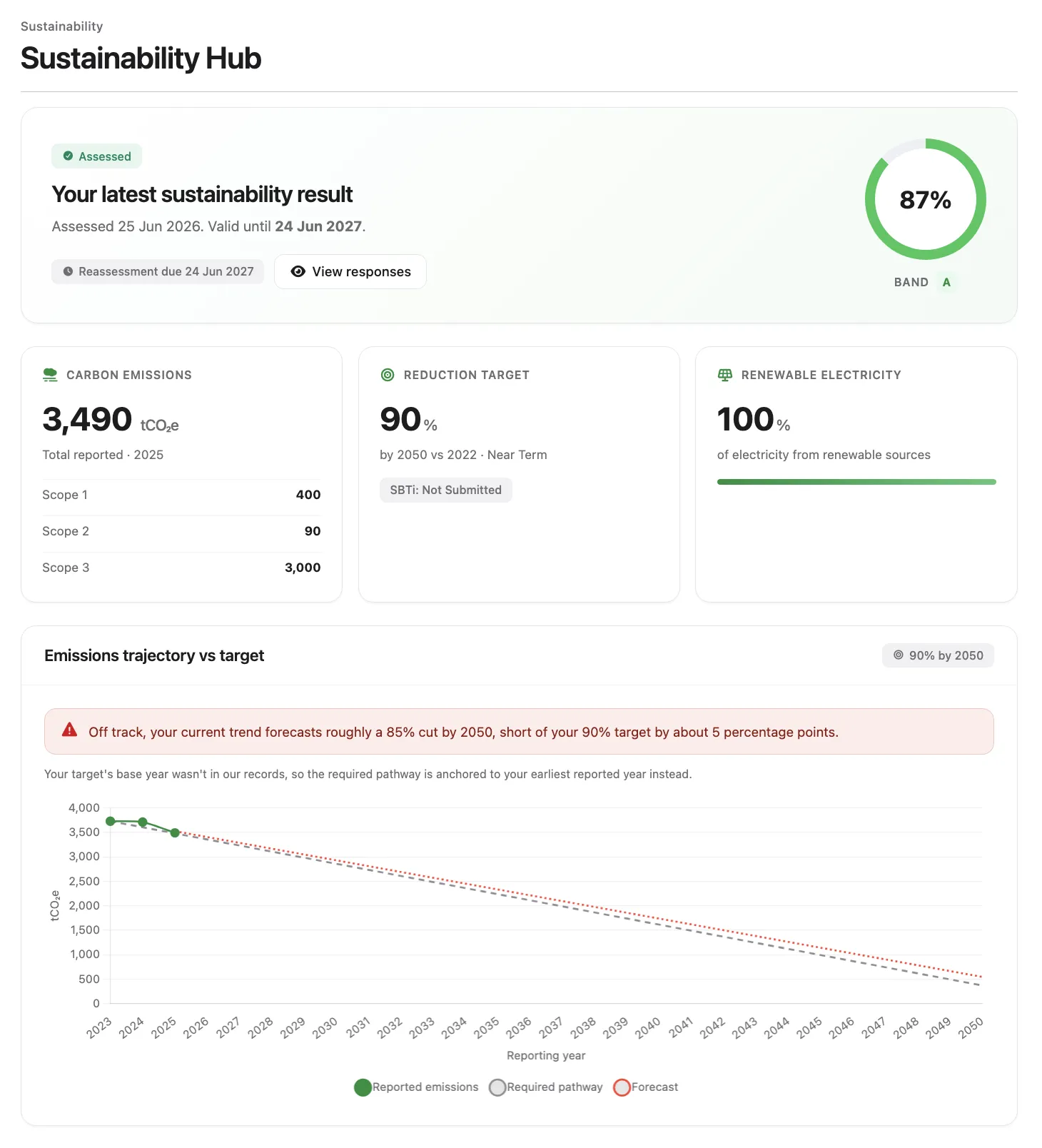
Carbon Reduction Plans (CRPs) have become an increasingly common requirement across the construction industry, particularly when bidding for public sector contracts and working with larger contractors. However, whilst many organisations now have a Carbon Reduction Plan, not all plans provide the same value. Some are little more than a compliance exercise, produced once, uploaded to a website and forgotten about. Others become a valuable business tool that helps organisations understand their emissions, engage their supply chain and make measurable progress towards their sustainability goals. So, what separates a good Carbon Reduction Plan from a poor one?

Read article
Why Recording Scope 1, Scope 2 and Scope 3 Emissions Is Becoming Essential in Construction
15 Jul 2026

Why Recording Scope 1, Scope 2 and Scope 3 Emissions Is Becoming Essential in Construction

Sustainability is no longer a "nice to have" in construction. Clients, investors, regulators and supply chain partners are increasingly expecting organisations to understand and reduce their environmental impact. For many businesses, this starts with measuring carbon emissions. However, carbon reporting is often more complex than simply looking at fuel usage or electricity bills. To build a complete picture, organisations need to understand Scope 1, Scope 2 and Scope 3 emissions. Whilst these terms are becoming increasingly common in tenders and sustainability reports, many organisations are still unsure what they actually mean, or why they matter. Understanding the differences is the first step towards making better decisions, improving reporting and building a more sustainable construction industry.

Read article
Are We Building for Tomorrow's Climate?
13 Jul 2026

Are We Building for Tomorrow's Climate?

This week, much of the UK has experienced another spell of exceptionally hot weather. For many people, it's a welcome reminder that summer has arrived. For the construction industry, however, it raises a much bigger question.

Read article
Why Most Net Zero Strategies Fail Before They Reach the Supply Chain
01 Jun 2026

Why Most Net Zero Strategies Fail Before They Reach the Supply Chain

Over the past few years, net zero has moved from a sustainability initiative to a boardroom priority. Businesses are measuring carbon emissions, publishing carbon reduction plans and setting ambitious net zero targets. Yet many organisations still struggle to achieve meaningful progress. The reason is surprisingly simple. Most net zero strategies focus heavily on internal operations while overlooking the area that often contributes the largest share of emissions: the supply chain. For many organisations, particularly in construction, facilities management and infrastructure, supplier-related emissions can account for the majority of their overall carbon footprint. Until businesses gain visibility of their supply chains, meaningful carbon reduction will remain difficult to achieve.

Read article
Supply Chain Risks in Renewable Energy Projects (UK Guide for 2026)
30 Mar 2026

Supply Chain Risks in Renewable Energy Projects (UK Guide for 2026)

The UK’s transition to renewable energy is accelerating rapidly, with major investment in wind, solar and energy infrastructure projects. However, behind this growth lies a critical challenge: supply chain risk. From material shortages to supplier compliance issues, renewable energy projects are increasingly exposed to disruption. Without the right controls in place, these risks can lead to delays, cost overruns and reputational damage. This guide explores the key supply chain risks in UK renewable energy projects and how to manage them effectively.

Read article
Carbon Reduction Plans (CRPs) Explained for Tendering
25 Feb 2026

Carbon Reduction Plans (CRPs) Explained for Tendering

Environmental sustainability is no longer optional in public procurement. Across the UK, contracting authorities are embedding carbon reduction requirements into tender processes, making environmental transparency a formal condition of doing business with government. One of the most significant developments in this area is the requirement for suppliers to publish and submit a Carbon Reduction Plan (CRP). But what exactly does a CRP involve, when is it mandatory and how does it influence tender evaluation? Understanding these requirements is now essential for any organisation bidding for public sector contracts.

Read article
Green Procurement: What It Is & Why It Matters
23 Feb 2026

Green Procurement: What It Is & Why It Matters

Sustainability is no longer a “nice to have” in procurement, it is increasingly a core evaluation criterion in both public and private sector tenders. Environmental impact, carbon reduction, ethical sourcing and long-term resource efficiency are now embedded into procurement policy. This shift has given rise to Green Procurement, sometimes referred to as environmentally responsible or sustainable procurement. But what does green procurement actually involve and why does it matter in today’s tendering landscape?

Read article